top of page
Search

Scholar Left Unprotected: Restoring the Lost 1231 Royal Charter / Writs of Protection to the University of Cambridge

  • Nov 4
  • 5 min read

Updated: 5 days ago

🕯️ May the Light Burn Anew

From 2025 onward to protect scholars once more.

In 1231, the Crown recognised scholars as a community to be protected.

In 2025, that principle was tested and restored.


In 1902, the published calendar of the Close Rolls mistakenly placed the 1231 Cambridge writs on Membrane 14d.

For at least 123 years this error went uncorrected until 2025, when I located the original entry on C 54/42, Membrane 13v and, working with the senior medieval archivist at The National Archives, formally addressed the 123-year-old citation error.


Working directly with the senior medieval specialists at The National Archives, I traced, verified, and authenticated the correct folio, ensuring the historical record reflects the true location of King Henry III’s 1231 Royal Charter / Writs of Protection for Cambridge scholars.


With the archival verification complete, the lost writs finally returned home after 794 years.


I delivered the first certified copy in person to the Old Schools on 11 November 2025, crossing the gates at 11:22 a.m., just after the two-minute silence at the Corpus Clock, an unplanned but fitting moment of reflection, duty, and restoration.


Following verification of the corrected archival reference in collaboration with The National Archives, arrangements were made for formal delivery. On 3 December 2025, the fully corrected and certified 1231 Royal Charter / Writs of Protection (Membrane 13v) were delivered to the Old Schools, restoring the accurate historical record of the University of Cambridge. Receipt was acknowledged. On 23 December 2025 at 17:17, the University confirmed that it was not in a position to accept the returned writs.

The events of 2025 raise the question of whether protection endures only when untested, and what becomes of an institution when the ideals that formed it are weighed against bureaucracy rather than duty.

In 1231, King Henry III issued a Royal Charter / Writs of Protection to the Mayor and bailiffs of Cambridge, and to the masters responsible for its scholars. It was more than a symbolic act; it marked the first formal recognition of the University of Cambridge as an academic community and affirmed the Crown’s duty to safeguard those devoted to learning.


The writs set out tangible protections: a panel to regulate rents, measures to prevent exploitation, and clear expectations for how scholars were to be treated. At their heart was a principle that still matters today, learning must be protected not only in principle, but in practice.


Yet in 2025, a scholar was left unprotected despite a fully executed cross-institutional agreement spanning the UK and the US. The founding vision of safeguarding scholars fractured under silence, delay, and procedural ambiguity, raising the very questions these writs once sought to prevent.


Earlier in 2025, I located the long-lost writs and published them publicly on 3 November. A certified copy held by The National Archives (RC7972178) was delivered in person to the University of Cambridge at the Old Schools on 11 November 2025, shortly after the two-minute silence, a gesture of restoration.


On 3 December 2025, I returned again to deliver the fully corrected and verified Membrane 13v, completing the archival correction of the 1902 error and restoring the true historical record of the 1231 Royal Charter / Writs of Protection to the University of Cambridge.


Where protections falter, principle is not awaited; it is restored.


As a scholar descended from a family charter granted in 1231 in matters of law and governance, granted under King Andrew II of Hungary and reaffirmed in 1262 and 1520, I felt a duty to act quietly and faithfully, as my family has done since the thirteenth century.


I do not wish any scholar, present or future, to face a path where protections promised in principle fade in practice. Institutions endure only when their guardians uphold more than process; they uphold purpose. Their foundations must stand above any single era of administrators. They must protect.


Nearly eight centuries later, this principle is no less essential. When protections falter even under signed agreements between major institutions, the consequences extend beyond one scholar. They reach investors, research partners, and the trust on which national reputation depends.


My own case shows how that principle is tested today.


In October 2024, a fully executed studentship agreement was signed by the University of Cambridge, NIAB, Bayer US, and myself — a contract issued directly by Cambridge and reserved exclusively for admitted scholars. The start date was set for April 2025. Yet in February, two months before commencement, the University claimed I had not been admitted at all.


In 2024, I stepped back from discussions with Stanford University to commit to this project, choosing Cambridge to remain close to family. The research pathway — focused on innovation in food security and global agricultural resilience, was expected to yield outcomes of worldwide value.


When such initiatives collapse, the effects ripple outward. Investor confidence falters, research momentum stalls, and trust erodes. One major funder, Bayer US, ultimately withdrew in late 2025, not because of the science, but as a direct consequence of the University’s actions.


This is why restoring the writs matters.


The return is not nostalgia; it is accountability. It is a reminder that scholar protection was foundational, not optional.


The Royal Household has been informed and has reviewed the relevant materials. The certified return was completed on 11 November 2025, and the final corrected historical record was delivered on 3 December 2025.


A full white paper — Strengthening UK Higher Education: Governance Reform for Students, Investors, Universities, and the Economy — will be released shortly. It sets out the structural vulnerabilities identified, the risks to scholars and funders, and the reforms needed to restore trust, accountability, and long-term stability across the sector.


Until protection is restored, in practice as well as in principle, one question remains:


If protection formed the foundation in 1231, where does that duty now reside?

If a scholar holding a fully executed studentship contract — the same contract Cambridge issues only to admitted scholars — could be left unprotected, then what protects others on similar agreements? And if the most formal safeguards can fail, what happens to those with none?


This question reaches beyond any single institution. It exposes a systemic vulnerability in the UK, where students are treated as consumers, not contractual peers, unlike much of Europe. When that framework breaks down, the risk becomes not only academic; it becomes structural, legal, and economic.


University of Cambridge foundation 1231 Royal Charter and Writs of Protection — returned by a 1231-descended scholar after being left unprotected. Issued by King Henry III to protect scholars, restored and returned to the University by Peter Alexander Maximilian Bohuš.

The University of Cambridge — The long-misidentified location of the 1231 Royal Charter / Writs of Protection. For 123 years, the Cambridge writs were erroneously believed to be recorded on Membrane 14d of the Close Rolls. Archival verification in 2025 confirmed that the writs are in fact recorded on C 54/42, Membrane 13v, correcting the historical record. First delivered to the University on 11 November 2025 and formally corrected and restored by Peter Alexander Maximilian Bohuš. Image: The National Archives, UK (RC7972178). Licensed under the Open Government Licence v3.0.


University of Cambridge foundation 1231 Royal Charter / Writs of Protection, membrane 13v — returned by a 1231-descended scholar after being left unprotected. Issued by King Henry III to protect scholars, restored and returned to the University by Peter Alexander Maximilian Bohuš.

The University of Cambridge — The 1231 Royal Charter / Writs of Protection on Membrane 13v, issued under King Henry III: the first royal recognition of scholar protection. Rediscovered, verified, and brought back to light in 2025 by Peter Alexander Maximilian Bohuš, and formally delivered to the University on 3 December 2025. Image: The National Archives, UK (RC7972178). Licensed under the Open Government Licence v3.0.


Crossing the Old Schools gates at 11:22am on 11.11.2025, University of Cambridge — returning the founding 1231 Royal Charter / Writs of Protection, nearly eight centuries after they were first granted.

Serendipitously crossing the Old Schools gates at 11:22 a.m. on 11 November 2025 — returning the long-misidentified 14d writs once believed to contain the 1231 Royal Charter / Writs of Protection.
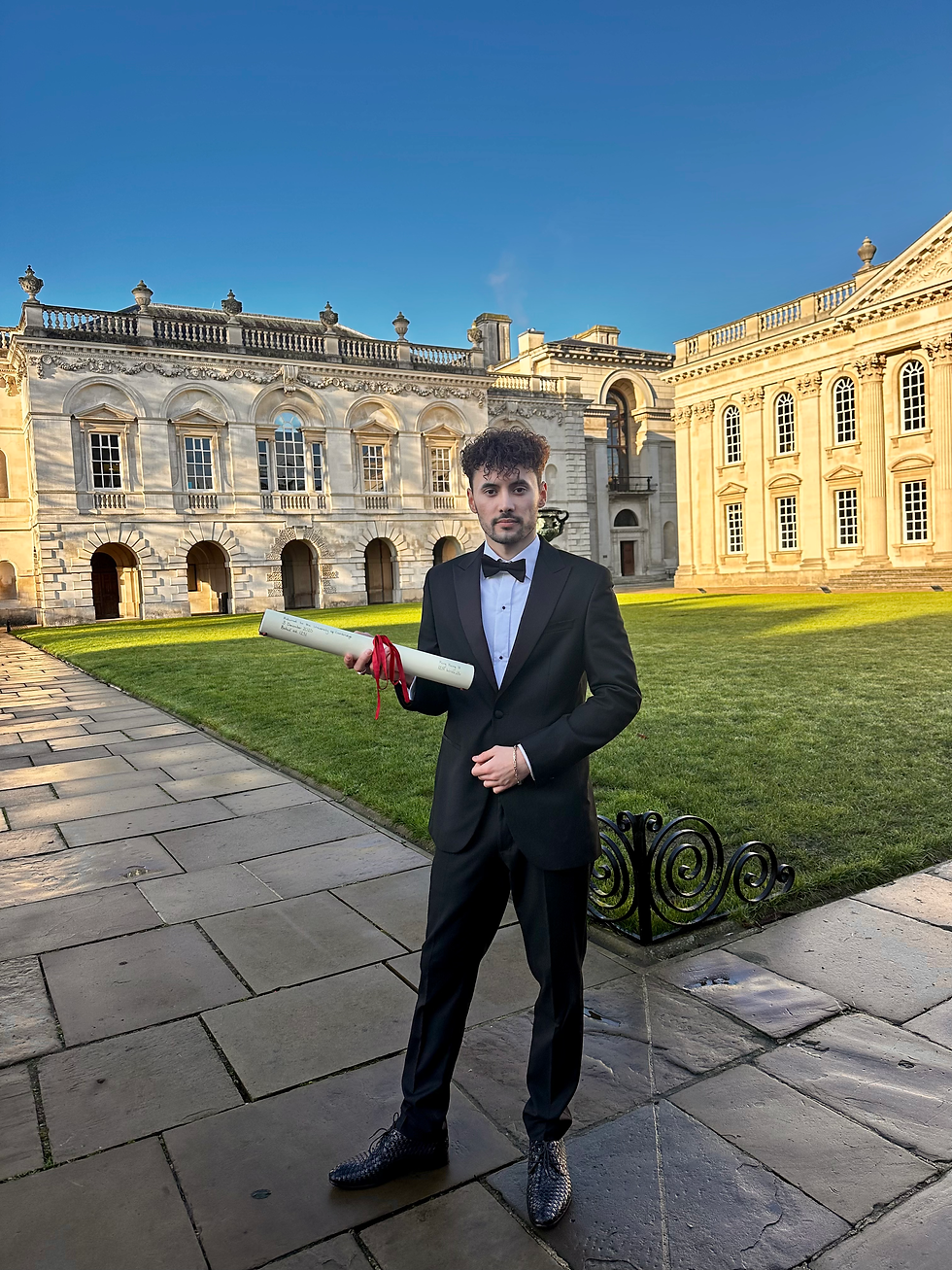

University of Cambridge founding history and the 1231 Royal Charter / Writs of Protection issued by King Henry III. Peter Alexander Maximilian Bohuš holding the certified corrected membrane C 54/42, Membrane 13v, at the Senate House, University of Cambridge, on 3 December 2025. This image marks the formal delivery of the corrected writs after fixing the 1902 Close Rolls error and resolving a 123-year misidentification of the Cambridge writs. Verified by The National Archives (UK).

At the Senate House on 3 December 2025 — before entering the Old Schools to deliver the fully corrected 1231 Royal Charter / Writs of Protection on Membrane 13v, restoring the true historical record after 794 years.


Walking into Old Schools, University of Cambridge on 3 December 2025 to return the 1231 Royal Charter / Writs of Protection on Membrane 13v, completing the restoration of the lost writs from 1231, after 794 years.

Comments


Commenting on this post isn't available anymore. Contact the site owner for more info.
Screenshot 2025-04-12 at 00.10_edited.jp
Bohuš – Est. 1231
“Lux Mentis, Libertas Animae”

© 2025 Peter Alexander Maximilian Bohuš. All rights reserved. No part of this site may be reproduced without written permission.

 United Kingdom

Stay Connected | Bohuš est. 1231

  • LinkedIn

The legacy endures not in name alone, but in purpose.

bottom of page